We do what others do.
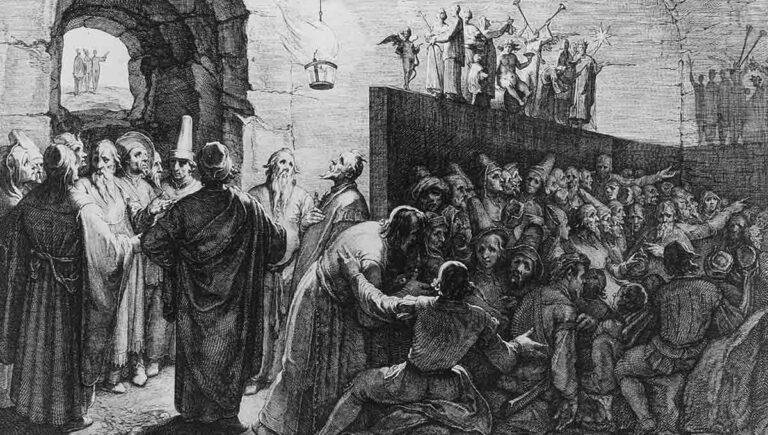
More than two thousand years ago, Plato described a thought experiment in his book ‘The Republic’ about a group of people imprisoned in a cave. They had been there since birth, chained, their heads fixed so they could only look at a stone wall. Behind them burned a fire, and guards walked past carrying shadow puppets and other objects. The shadows cast on the wall were the only images the prisoners had ever seen. This was their real world.
One prisoner managed to escape. The light blinded him. It hurt. His eyes were so accustomed to the dark that daylight was unbearable. Slowly he adjusted. A world revealed itself that he had never known. Real trees, real people, the real world.
He decided to go back. To tell the others that their world was an illusion. They did not believe him. They would kill him.
Written two thousand years ago. It reads like it was written yesterday.
Because of my background in photography and my working life in web, UX and UI design, observation has become my nature. Looking, for me, immediately means making connections, associating, analysing. My entire working life has been spent creating images, and really, therefore, creating perceptions. Marketing, advertising, campaign websites, banners, and the usability of systems: they are all elements that shape how people see reality. For most of my working life, I have been helping to construct images so that other people would believe them, and buy.
And I scroll along myself. On Instagram, on LinkedIn. I watch the world move and stories take shape. I am that prisoner in the cave.
Once you’ve seen it, you can’t unsee it, everywhere. As in 1969, on a busy street corner in New York.
The Man Looking Skyward
A man stands on a busy street corner looking up at the sky. There is nothing unusual to see. The passers-by walk past without looking up.
Then there are five of them, all staring at the sky. Now passers-by stop. They look up too, searching for what’s there. More people look up and the group keeps growing. Eventually the whole pavement is looking, and nobody knows what at.
This was no accident. It was an experiment by psychologists Stanley Milgram, Leonard Bickman and Lawrence Berkowitz. Their finding: the larger the group doing something, the greater the chance that others will join in.
We call this social proof. It’s as old as humanity.
A Crooked Line
In the 1950s, Solomon Asch conducted a series of experiments that are still uncomfortable to watch today. If you don’t know them, look them up, they’re worth it.
A student is invited to take a perception test. He is shown a card with three lines of different lengths and a reference line. The question is simple: which line is the same length as the reference? The answer is plainly visible.
But the other participants, all actors, deliberately give the wrong answer. Confident, unanimous, showing no sign of doubt.
In 37% of the answers on the critical questions, the subject gave the wrong one. He could see the right line, and yet said something else, because the group told him what was correct.
Afterwards, some participants said they had genuinely started to doubt what they saw. It was the group that shifted their perception. Others knew they were wrong but preferred to stay silent rather than stand out.
Both reactions are recognisable. Both are human. And both are exactly what social proof does when it holds long enough.
The Lift
A classic of hidden-camera television. An unsuspecting person steps into a lift. The other passengers, all staged, are standing with their backs to the door. Nobody is facing forwards.
The new arrival looks around in confusion, hesitates, and then turns around too.
No social pressure. No explanation. Just that awkward silence and the automatic assumption: if everyone does it this way, this is probably how it’s done.
Not stupidity. Efficiency. The brain makes thousands of decisions every day based on what others do; it would be energetically impossible to reason through everything from scratch. Conformity is not a weakness. It’s wiring.
But wiring can be redirected.
The Minority in Control
Serge Moscovici showed in 1969 something Asch hadn’t: the current can flow the other way too.
In his experiment, participants were shown slides that were clearly blue. But two confederates consistently called them “green.” Not aggressively, not loudly, just consistently and confidently. Over time, some participants began describing the slides as greenish too. The minority had measurably shifted the majority’s perception.
A small group that keeps repeating something, confidently and consistently, can eventually shift the definition of normal.
This works in both directions. It’s how activists create new norms. It’s also how disinformation spreads. And it’s how platforms train their users to think.
Simply White
Apple understood something most companies don’t: you don’t need to fabricate social proof if you can design it in.
When the iPod was introduced, the device disappeared into a pocket, invisible. But the white earbuds Apple included were anything but. They stood out, because at the time only black earbuds existed on the market. This person has an iPod.
Other owners recognised each other. People who didn’t have one yet could see it. It became a phenomenon, not through advertising, but through visible behaviour in public. Apple had built social proof into the product itself.
This is social proof at its best: authentic, unforced, and in service of a product that earns it.
The Damp Towel
In 2008, Goldstein, Cialdini and Griskevicius studied something hotel guests encounter every day: the card in the bathroom asking you to reuse your towels.
Two versions. First: the standard message about environmental protection. Second: “Most guests at this hotel reuse their towels.” The second worked more than a quarter better. Not because the message was stronger, but because it described a social norm. Others are doing it.
This is the turning point. Not bad, not manipulative, but the moment where social proof becomes a deliberate instrument for steering behaviour. The norm is not reality. The norm is the conviction.
One caveat: a later replication in German hotels didn’t find the difference. The effect is real, but less robust than it’s now retold.
Pressure on the Boiler
Something you encounter every day.
You’re looking for a hotel room. Under the price it says: “Only 2 rooms left!” And: “19 people are looking at this hotel right now.”
Both may be true. But both are also trivially easy to fabricate. The scarcity is simulated. The popularity is simulated. The urgency you feel: that’s real, even when the cause of it isn’t.
Fake reviews. Purchased followers. Stars from bots. Fake Instagram followers. “Bestseller” on a book that sold well for one week. “Trending” on a video pushed up by an advertising budget.
These aren’t edge cases. This is the system. And our brains respond to it in exactly the same way as to real social pressure, because they can’t see the difference. Not if you’re not aware of it.
The Engineers of Behaviour
In 2017, Sean Parker, Facebook’s first president, said it openly in an interview:
“It’s a social-validation feedback loop … exactly the kind of thing that a hacker like myself would come up with, because you’re exploiting a vulnerability in human psychology.”
This was not an outside accusation. This was the system’s architect describing what the system was doing.
In 2014, Facebook published a study in the scientific journal “PNAS”. They had secretly adjusted the news feed of 689,000 users, more positive posts or more negative, to measure how this affected their own behaviour. Emotional contagion at industrial scale, without consent, published as a scientific experiment.
And then there is B.J. Fogg, who founded the Persuasive Technology Lab at Stanford, a laboratory dedicated to understanding and deploying psychological mechanisms in technology. A large proportion of the designers who later built platforms like Facebook, Instagram and Google passed through that lab.
These are not malicious individuals. They are people who understand how the brain works, and who put that knowledge in service of systems that grow on attention. Attention that is measured, optimised, and sold.
And we, the users, feel good about it. We scroll, we share, we react. We join in because everyone joins in.
The Prisoner Who Came Back
Social proof is not a flaw in the system. It is the system. It is how people have navigated a complex world for hundreds of thousands of years, by watching what others do and learning from it. That wiring is neutral. It can be used to help people. It can be used to nudge behaviour in a good direction. And it can be used to make people feel they are choosing freely, when the choice was made long ago.
We scroll through feeds assembled for us and call it news. We see likes and follower counts and call that value. We feel urgency at a countdown timer and call that a decision.
There are people who saw this from the inside, who knew the system and chose to go back. Sean Parker was one. The man who designed the validation loop and later described in an interview what he had done. Tristan Harris left Google and built a movement around one question: what is technology actually doing to people? Frances Haugen brought internal documents to light showing the company knew the harm it was causing, and chose to continue.
They came back into the cave and told us what they had built, and what it had done to us.
Parker was written off as a disgruntled ex. Harris was ignored until a Netflix documentary made him briefly relevant. Haugen was heard by the Senate. Two weeks of media wave, and then the feed moved on to the next thing.
Plato knew this already. The prisoners don’t want to hear that the shadows aren’t real. They have invested their whole lives in that reality. And the one who comes back with the light in his eyes, they don’t see him as a liberator. They see him as a threat.
We do what others do.
And some of us make sure we do.